
Adulting isn’t just about paying bills — it’s about learning how to nourish yourself with confidence. In this episode, we’re diving into the essentials of grocery shopping, mastering simple cooking skills, and using spices to elevate any dish. You’ll meet one of our favorite local purveyors, learn the 5-4-3-2-1 grocery method, and pick up pro cooking and health tips from Chef Scott and our RD Rachel. Get ready to stock your kitchen like a pro — on a budget!
Local Flavor Spotlight: Specialty Produce

Specialty Produce is a San Diego gem — a family-run company supplying restaurants, chefs, and home cooks with the freshest produce around. Their commitment to quality and community makes them the perfect partner for Chef Angels.
In this video, we take you behind the scenes for a quick tour of their local market and learn how their team connects growers with kitchens across San Diego County.
 Looking for a career in food distribution or produce management? Explore job opportunities at Specialty Produce.
Adulting 101: The Easy Grocery Formula (5-4-3-2-1)
Feeling overwhelmed by grocery shopping? This easy grocery formula takes the guesswork out of filling your cart and helps you stock your kitchen with fresh, balanced options — no stress, no waste, no overspending. This simple 5-4-3-2-1 method helps you plan a week of meals with variety and nutrition in mind:
5 vegetables — your base for meals, sides, and snacks
4 fruits — for smoothies, breakfast, or healthy sweet fixes
3 proteins — think chicken, fish, tofu, or beans
2 grains or starches — like rice, pasta, or potatoes
1 sweet treat — because balance is part of adulting
It’s that simple: one list, five categories, endless healthy meal options. Master the formula, and you’ll never stare blankly at the grocery aisles again.
Spice Check: Flavor Made Simple
If salt and pepper are your comfort zone, it’s time for a glow-up. Spices are the game changers that turn “just okay” meals into “how did you make this?” moments.
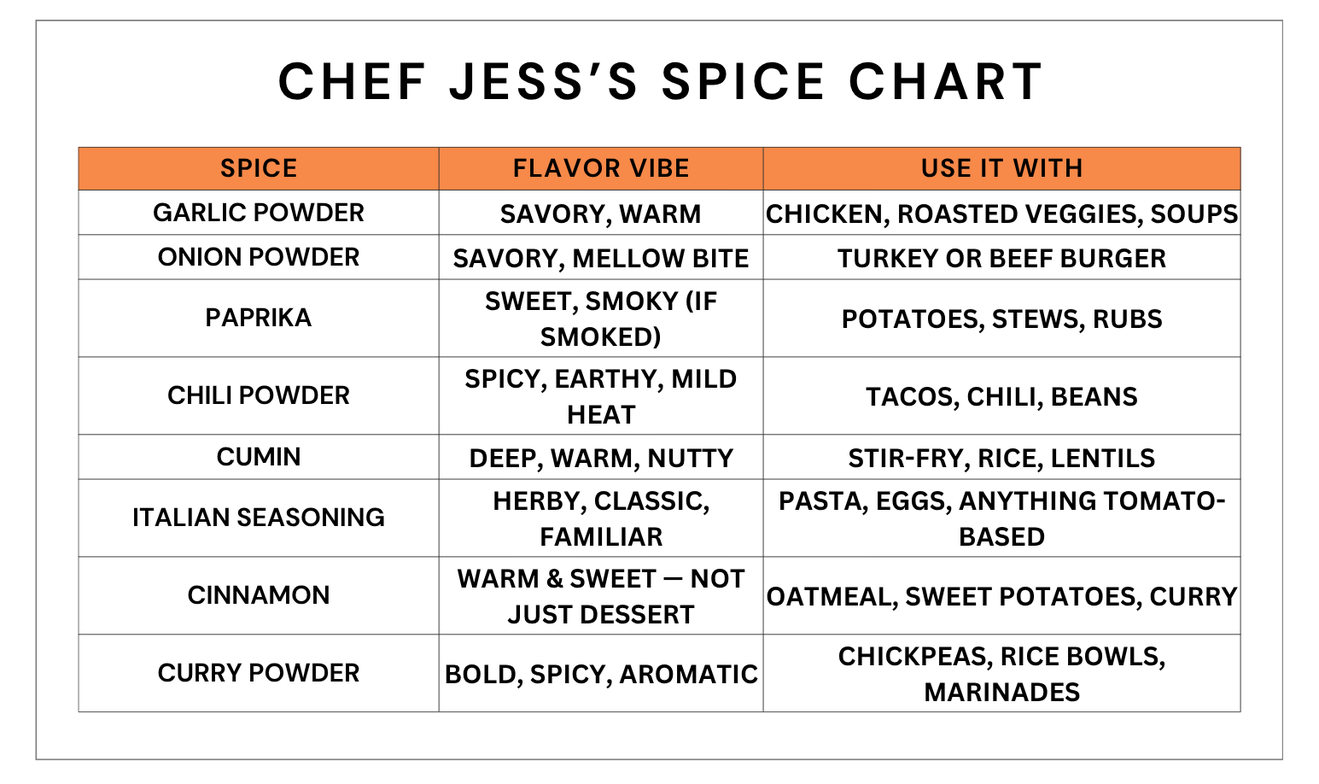
Use Chef Jess’s Spice Chart to learn the flavor vibes of eight key spices — from warm garlic powder to smoky paprika — and start experimenting with new blends. Trust your taste buds: the best cooks don’t follow rules, they create them.
Kitchen Confidence: Seasoned Perfection
Want to see those spices in action? In this quick video, Chef Jess walks you through how to use spices to elevate a simple dish — and how to sear a juicy chicken breast like a pro.
Watch how spices transform everyday cooking into something crave-worthy.
Pro Tips:
Salt every layer. A little when you boil pasta, a little in the sauce, and a final pinch before you serve — salt doesn’t make food salty, it brings out flavor.
Let your spices bloom. Add them early — right after your oil hits the pan — so the heat wakes them up and releases their full aroma.
Start simple. Two spices are plenty to make something fire: try garlic + paprika on potatoes or cumin + chili powder in ground turkey.
Eat Smart with Rachel: Trust Your Gut

We often hear “trust your gut” — but your gut (and digestive system) does much more than digest food. It’s connected to your brain through the vagus nerve, and the bacteria living in your gut — your microbiome — are influenced by the foods you eat. These bacteria play a powerful role in digestion, immunity, and inflammation control.
Gut bacteria break down fibers that your body can’t digest on its own, producing butyrate, an energy source that helps keep the gut barrier strong and supports your immune system.
To keep your microbiome healthy, eat a mix of:
Probiotics: live bacteria in fermented foods like yogurt, kefir, kimchi, tempeh, and sauerkraut.
Prebiotics (even more important): fibers that feed good bacteria, found in beans, oats and other whole grains, nuts, seeds, and fruits and veggies such as banana, apple, avocado, broccoli, and asparagus.
Pro tip: Start slow — gradually add more high-fiber foods to your diet to avoid bloating, and try a quick 10-minute walk after meals to support digestion.
Cook Smart with Chef Scott: Budget-Friendly Meal Prep

Shopping economically for meal prep is a smart way to save money and reduce food waste. Start by planning meals around weekly sales, using store flyers or apps to find the best deals. Buy staple items like rice, beans, and frozen vegetables in bulk, and choose in-season produce for lower prices. Preparing meals in advance helps avoid costly takeout and makes it easier to stick to a grocery list, keeping spending in check while ensuring you have healthy, ready-to-eat options throughout the week.
Hot Tips
Purchase proteins in bulk, or family packs (typically cheaper).
*Using this for larger meals to have leftovers for lunch and other meals throughout the week.
Portion & marinate meats for the entire week and/or wrap and freeze for meals later in the week or next week.
Purchase seasonal items fresh, and be sure to have pantry or frozen items to help along with meals and snacks.
SD Culinary Connections: It’s Time to Plan for Spring Semester
Thinking about culinary school or job training? Here are a few great local options:
Kitchens For Good
Tuition-free culinary training in San Diego for adults 18+ facing barriers to employment. Want to join the next cohort? – See if you qualify! Learn More Here!
Community College Culinary Programs:
Explore affordable culinary education at local San Diego colleges. In addition to degree programs, many offer extended and continuing education classes — some free or low-cost — so you can build skills at your own pace.
- Train in a student-run restaurant and earn certificates or an AS degree in Culinary Arts, Baking & Pastry, or Culinary Management.
- Learn from instructors who are seasoned professionals — gain foundational skills through hands-on classes, field trips, and guest chef appearances.
- Build both cooking and baking skills through career-focused certificate and degree programs that also cover food handling, ingredient function, and kitchen teamwork.
